
How Arrest Warrants Work in Sumter County
In Sumter County, an arrest warrant is a judge-signed order that authorizes an arrest after the required sworn showing. South Carolina law spells out magistrate and municipal court authority for arrest process, and the official state forms pair an Arrest Warrant with an Arrest Warrant Affidavit. Felony matters in General Sessions follow the Circuit Court track. Keep two roles separate here: the court that signs the order and the agency that serves it do different jobs. A Sumter County warrant can tie back to a City of Sumter matter, a magistrate case, or a higher-court file. Match the court name and case information on your notice to the right clerk, and the paperwork route becomes clear. That one step tells you where to call.
Sumter Arrest Affidavits Use State Forms
Sumter County uses the same state forms as the rest of South Carolina. The Judicial Branch lists form SCCA412 for the arrest warrant itself and SCCA412A for the supporting affidavit. The warrant schema can carry the issuing county and court, the charge, the date, the judge's signature, officer instructions, and return or service details. The affidavit is where the sworn facts live. The Judicial Branch forms listing shows the current route to both forms.
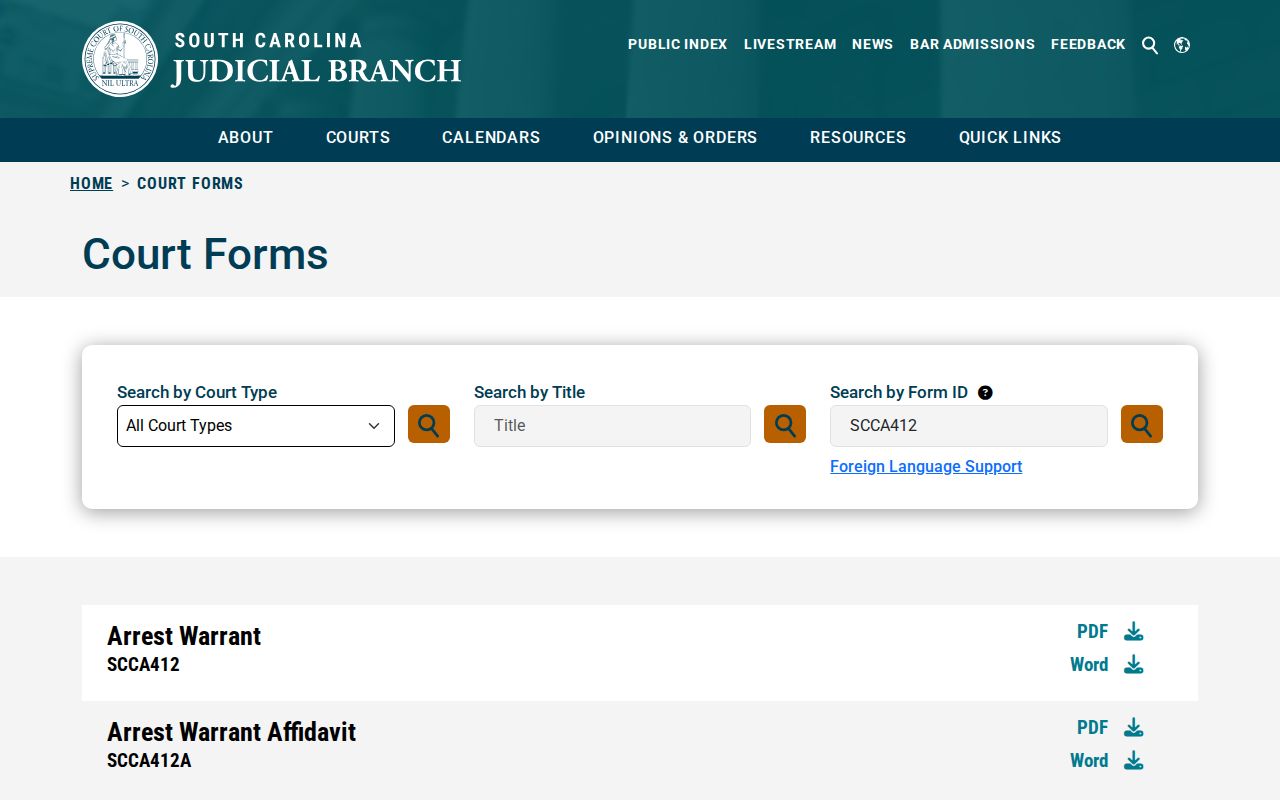
A completed Sumter County form can hold private details, so any public copy stays at the field-category level.
Arrest Warrants: What They Contain
Two documents, two jobs. The warrant hands the officer authority and names the court, charge, and date, while the affidavit records the sworn basis for it. A South Carolina Public Index search for a Sumter County case can return a case number, type, status, filing date, and court agency. It will not reproduce every warrant field, though.
| Case / warrant number | Links the order to a file; the research found no public Sumter number format. |
|---|---|
| Named person | Identity appears on the official record; do not republish personal identifiers. |
| Charge | Offense or allegation named in the court process. |
| Issuing court | Identifies the judge or clerk to contact about the order. |
| Bond | May be set by court order; no fixed Sumter amount was located. |
| Date and return | Shows issuance or service details where the record includes them. |
Sealed Sumter Warrants May Not Appear
Some Sumter County warrant material stays sealed or withheld while a matter is restricted or law enforcement is still active. The South Carolina Freedom of Information Act carves out exemptions for certain investigations, confidential sources, techniques, fair-trial concerns, and safety. Juvenile and expunged records carry their own access limits. A blank online result proves nothing about whether a warrant exists. Ask the issuing clerk or agency what can be released and why a requested field is redacted. And never post a completed affidavit or personal identifiers in a public page or message.
How Warrants Get Served in Sumter County
The Sumter County Sheriff serves county process, while Sumter Police runs a Warrant Division for City Municipal Court warrants and subpoenas. Other authorized officers may serve process depending on the issuing court and jurisdiction. The Sheriff's contact page routes county service questions, so start there. No office publishes a universal Sumter County service schedule, entry policy, or location for voluntary surrender. Sumter Police does describe a City arrest-warrant sequence: transport to the Detention Center, booking, photographs, fingerprints, and an arrest ticket for a bond hearing or court. That is the city's own description. It is not a rule for every county or town court.
Sumter City Arrest Booking Has a Defined Route
The City of Sumter Warrant Division says a person picked up on an arrest warrant goes to the Detention Center for booking, then receives an arrest ticket for the bond hearing or court. The same City page describes the Division's court-day work with a bailiff and transport officer, plus its extradition role for people held in other jurisdictions. For City Municipal Court questions, the Division takes weekday phone calls from 8:30 a.m. to 5 p.m., with a separate after-hours line. The official City warrant page carries those contact details. Sumter County readers should note it publishes no arrest roster. Call before you assume anything about custody.
Arrest Warrants, Summonses, and Bench Warrants
South Carolina law allows a summons instead of an arrest warrant in some settings. Sumter Police calls its local written notice a courtesy summons: you get a court date and go home. Miss that date, though, and a bench warrant can follow. The Sumter County bench warrant route covers the court-specific follow-up.
| Feature | Arrest Warrant | Summons | Bench Warrant |
|---|---|---|---|
| What It Orders | Arrest under court authority | Appear at a stated date and time | Response to a missed court duty |
| Basis | Sworn facts and required judicial finding | Situation permitted by state law | Failure to appear or comply |
| Who Issues It | Judge or magistrate | Authorized court or officer | Judge for the existing case |
| How to Respond | Confirm status and seek counsel | Appear as directed | Ask the issuing court about recall |
Sumter County Arrest Process Has Separate Offices
One Sumter County arrest can involve four offices. The Clerk of Court keeps General Sessions files. The issuing magistrate or municipal clerk controls the lower-court matter. The Sheriff's Warrant/Civil Process line routes county service, and the Detention Center answers custody and intake questions. For a City of Sumter matter, ask the Municipal Court or City Police Warrant Division. Mayesville and Pinewood each run their own municipal courts, and neither town posts a separate police warrant portal. The right contact always comes down to the court printed on the notice, so read it before you dial.
Handling an Arrest Warrant in Your Name
Ask the issuing court or Warrant Division to confirm the case, its current status, and the next required action. A lawyer can verify the order, contact the court, and plan an appearance, surrender, or bond request. The Sheriff's public pages state no walk-in surrender process, bond-window hours, or accepted payment forms, so confirm those details first. Posting bond can get you released, but it does not end the underlying charge. Keep every court paper, the arrest ticket, and any receipt, then ask when the docket should update. If an arrest is already underway, follow instructions from counsel and the responsible agency in Sumter County.
Important: Talk with an attorney before arranging a surrender, and verify the correct court, location, and reporting time.
Sumter Surrender Instructions Need Confirmation
No office in Sumter County publishes a standing walk-in surrender site or an after-hours procedure. Nor does any official page promise that walking up to a clerk's counter shields you from arrest. So call first. Reach out to the issuing court, Sheriff Warrant/Civil Process, or the City Police Warrant Division, depending on which office holds the case. Ask where to report, what identification to bring, and whether a lawyer should arrange the appearance. Bond Court and the Detention Center each list separate contact routes. The public pages set no countywide bond amount or payment method, so a written court order remains the surest confirmation of any bond condition or next date.